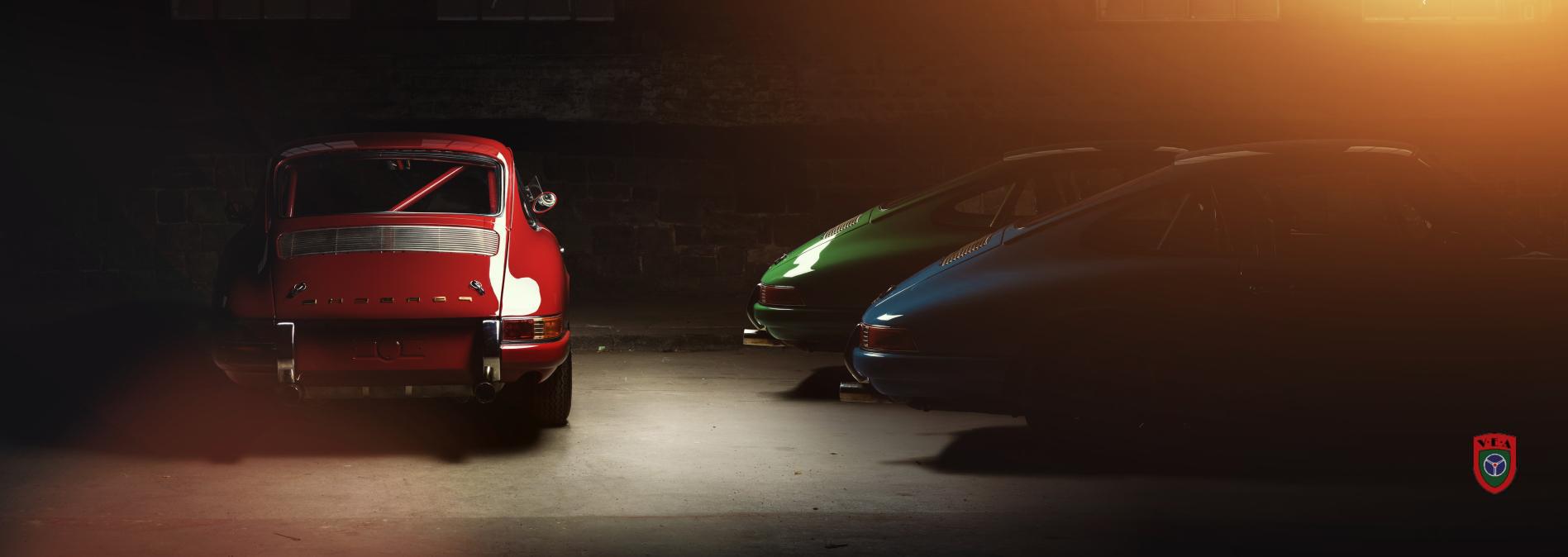
LANCIA FULVIA I.6 HF
(1968-1969)Moteur : V-4
Cylindrée : 1 588 cm³
Puissance : 115 – 132 ch
Boîte : manuelle, 5 rapports
Vitesse maxi : 185 km/h
Quantité : 1 280

Ci-dessus : la Fulvia de 3e série dans sa version britannique, avec des phares montés plus haut et bien sûr le volant à droite.
Lancia Fulvia 1.6 HF
I come from a modest background. My three sisters and I were raised by our mother, who brought us up on her own. We were a close knit family, and we learned to appreciate what we had while still dreaming about things that sometimes seemed far beyond our reach.
As a child, I was a dreamer. I struggled at school, not because I lacked curiosity, but because my mind was often somewhere else. I would sit at my desk lost in thought, imagining places, objects and stories. Looking back, I believe that way of observing the world shaped much of the person I eventually became.
Cars fascinated me from an early age. It was never mainly about horsepower or the mechanics of an engine. What captivated me was the beauty of the object, the lines, the proportions, the presence of a car and the pleasure of driving it. For many years, however, the cars I admired remained distant objects, things to look at rather than things I imagined I might one day own.
As soon as I began showing a serious interest in old cars, people noticed me as the young one who was passionate about classics. Most people my age seemed more interested in luxury cars, large American cars or muscle cars. Those worlds never truly appealed to me. To my eye, they often lacked the finesse and distinction I was looking for.
I design sets for television, so details, proportions and the beauty of objects have always mattered deeply to me. That sensitivity naturally influences the way I look at cars. I do not see a car simply as a means of transport. I see an object that has been drawn, considered and shaped with intention.
My love of French cars grew from that attention to detail, the precision of their design, their willingness to be different and, at times, their remarkable sense of the avant garde.
But above all, it was the beauty.
The beauty of the lines, the proportions and the small details that give a car a genuine personality. That way of seeing the world would eventually lead me to Citroën.
My love affair with the marque truly began in 2016. It was the beginning of a former relationship, and I was about to meet my partner’s family for the first time.
A bond of trust and affection quickly developed between me and my partner’s parents. Daniel, my partner’s father, was eager to share his passion with me, and one day he introduced me to a garage filled with old cars, most of them Citroëns. The variety was extraordinary, and the condition of the cars was almost unbelievable.
My heart stopped.
I did not yet fully understand what I was looking at, but I knew that I had fallen in love with these cars.
The real turning point came when I was given the chance to drive beside Daniel in his black 1950 Traction 15/6, with its flat boot and large bumpers. That was the moment I understood that something very special had begun.
Then came the DS, the Type H van and the 1938 11 Légère Cabriolet.
What struck me most, and what I will never forget, was the smell.
Sitting behind the wheel, I felt as though I had literally travelled back in time. When I switched on the radio, the only station we could receive was playing classical music. For a brief moment, it felt as if I had been transported into the past and allowed to experience something close to what people might have felt when these cars were new.
It was magical. Unforgettable.
Then came the driving itself, feeling the car, listening to it and learning to understand it.
During the seven years that followed, we shared extraordinary journeys. Every summer, we crossed the border from Canada into the United States and drove to Stowe, Vermont. My partner and I travelled with his brother and his parents.
We drove the black 1950 Traction 15/6. His parents came in their 1974 DS 23 Pallas, finished in Gris Palladium with a black roof and a five speed manual gearbox. His brother drove a grey 1956 Traction 15/6 H, complete with its very rare sunroof.
Those memories are indelible.
Over time, these journeys became our favourite pastime. We looked for any excuse to go for a drive, spend time together and take the cars out on the road.
That is also one of the things that moved me most about classic cars, their ability to bring together people from completely different backgrounds. They create unique moments, sometimes in the most unexpected places, simply because everyone involved wants to share the same passion.
As my passion grew, so did my curiosity. I was fortunate to spend time with Daniel, whom I still consider a walking automotive encyclopaedia. He taught me an enormous amount and shared his knowledge generously.
When my sister moved house, her furniture was transported in a 1980 Type H. Nothing less. On hot summer days, we would take the 1938 11 Légère Cabriolet for a drive, an exceptional car of seemingly endless elegance.
For a complete novice, it was an extraordinary immersion into the Citroën world. I was surrounded by some of the most remarkable cars an enthusiast could dream of owning, or simply having the privilege to drive.
Among them was one small car that was not a Citroën, but which immediately captured my heart, a 1973 Fiat 128 Abarth with twin carburettors.
It was my former partner’s favourite car. We often took it out on Saturday mornings to get coffee. He did not drive, so he became our passenger princess, and he loved those outings in the Fiat.
A few years later, in 2021, I convinced Daniel to sell it to me. The Fiat became mine, although I had no idea at the time that it would become the first car in my future collection.
Despite my love of Citroën, the Fiat was more accessible to my budget, helped considerably by the very generous price Daniel offered me.
Then, towards the end of the summer of 2024, while I was abroad working on a project, I received a message from Daniel. A 1972 Citroën Type HY, which had belonged to him about fifteen years earlier, had been listed in an online auction by its most recent owner.
Buying it was not remotely sensible, but the history of the van spoke to me immediately. Daniel had once converted it into an ice cream van, and my former partner had worked in it as a teenager.
There was only one thing left to do, take a chance and place a bid. Daniel did it for me.
One bid, and the van was mine.
I was in the middle of dinner on the other side of the world, and I had just bought my first Citroën. I had not stopped to ask myself where I would store it, since I had no suitable space, or even how I was going to manage the payments.
You could say I am impulsive.
As soon as I returned home, and goodness knows how impatient I was, I had only one thing in mind, making the van safe and reliable enough to drive.
The engine and its components were reconditioned, the brakes were attended to and the fluids were changed. In short, everything necessary was done to help a neglected van return to the road in the best possible condition.
My own mechanical skills are still limited. Although I am deeply interested, I have not yet acquired enough experience to take on every part of such a project myself.
I had even planned to repaint the entire van. I was thinking big.
After paying for everything required to make it mechanically sound, however, I decided that the cosmetic work would have to wait.
Here in Quebec, resources for maintaining old cars are limited. There are very few mechanics who truly understand how to care for these machines and respect the particularities that make them so different from modern cars.
Only a few weeks later, in October 2024, Daniel told me that a very close family friend, himself an extraordinary Citroën collector, was selling his collection. Everything happened quickly.
One car immediately caught my eye, initially because of its colour. I was surprised to discover that it was right hand drive. Daniel then explained just how unusual it was, a 1955 Traction Big Six H, built at Slough in the United Kingdom.
It had been fully restored by none other than John Gillard, a renowned Traction specialist and an exceptional authority on the model. He had originally begun the restoration for himself, before being persuaded to sell the car to the collector from whom I would eventually acquire it. In the early 2000s, the car was shipped to Canada.
With its red leather interior, elegant green grey bodywork and wooden dashboard, it was immaculate. It looked as though it had just left the factory. I was told that only a very small number of these cars remain in the world.
I wanted it.
None of this was reasonable. In fact, it was a terrible idea for my finances. But how could I let an opportunity like that pass? A car of this kind may appear only once in a lifetime.
So I went for it.
It became the third car in my collection, and I was as proud as a peacock. I finally had my own Traction, and not just any Traction, but something unique, rare and extraordinarily beautiful.
I had not even driven it yet.
I was far too impatient to wait. I knew the brakes needed to be checked, but I told myself that one short drive around the block could not hurt.
What a joy. It started as though it were new. The engine had a beautifully rounded, even note, and the comfort was remarkable. The hydraulic system, however, felt extremely sensitive. The car made large movements up and down, which did not seem normal.
We had spare spheres in the garage, so we wondered whether they might be the cause, or whether the system simply needed adjustment.
Soon afterwards, a French family friend was visiting Montreal. He owned a 15/6 H himself and, with great generosity, offered to help. He attended to the brakes and, since the car had not been used for some time, we also checked the fluids and replaced the spheres.
Once the work was complete, we set off for a drive.
The car was an absolute delight. Everything seemed perfect.
Then, suddenly, tac.
The car dropped.
There was no way to make it rise again. We returned to the garage very slowly, with the Traction riding almost on the ground.
You might imagine that I was discouraged, but I was not. I am an optimist, and I knew that situations like this were part of the experience of owning old cars.
We tried several things without success. We adjusted the height control rod and checked the height corrector, the hydraulic fluid and the pump. Everything appeared to be functioning, and yet the car stubbornly refused to rise.
Winter was approaching quickly. In Quebec, snow and severe cold often arrive in November and remain for far too many months. Our season for enjoying old cars is painfully short.
With no time left to continue the investigation, I stored the Big Six H and promised myself that I would return to the problem in spring.
Since I still could not properly enjoy driving the Big Six H while it remained settled close to the ground, I found another way to take pleasure in it. I began refining some of its details.
One of my favourite aspects of owning an old car is researching how it was originally equipped. I enjoy searching for the correct components and discovering the small details that help return a car to its proper character.
In the case of the Traction, I wanted to add a pair of auxiliary lamps to the front bumper. By a wonderful stroke of luck, Daniel already had a suitable set among his collection of parts.
My attention then turned to the badge on the front grille. The car was wearing a badge marked 15, which belonged to the French 15/6. Being a British built Big Six, mine should instead have carried a 6.
After some searching, I found someone on eBay who was reproducing the badges by laser cutting them from stainless steel. Once mine arrived, I took it to a specialist to have it chromed. It now shines beautifully on the front of the car.
I also wanted a proper front number plate holder for the bumper. A collector in France happened to have one among his spare parts and kindly sent it to me. I had it straightened, restored and rechromed before fitting it to the car.
These may seem like small details, but I take enormous pleasure in researching, restoring and installing them. Each one returns a little more dignity and authenticity to the car. For me, that process is deeply satisfying, almost as rewarding as driving it.
Meanwhile, I had driven the Type HY as much as possible during its running in period. It too had already provided a few surprises.
At one point, the main radiator hose, which had not been secured correctly, detached while I was driving along a busy boulevard. Coolant burst into the cabin, producing an enormous cloud of thick white steam.
Then, while I was driving the van to its winter storage, I heard a strange sound.
A worrying knock.
I immediately knew that something was wrong.
The engine had failed.
The Type HY completed its journey on a tow truck. Daniel and I then removed the engine ourselves, telling each other that we would surely find someone capable of properly redoing the work that had already been carried out.
I would deal with all of that after winter, or so I thought.
The months passed, and at last summer returned.
A specialist engine builder took over the Type HY’s engine completely. It was machined again, checked and rebuilt, with parts replaced wherever necessary, until it was essentially new. The same French friend later helped with the reassembly.
A great deal more money was spent. It was frustrating, of course, especially after having already paid for the first rebuild, but it was what had to be done if the van was finally to become sound and dependable.
We are now in the summer of 2026, and the Type HY has still not left its storage building. It is waiting patiently to receive its engine and, I hope, begin a second life.
The engine itself is beautiful, freshly painted, completely rebuilt and almost new. I cannot wait to hear it running again and to return the van to the road.
The Big Six H, meanwhile, is still sitting low, waiting for a clear diagnosis of its hydraulic problem. The Fiat is waiting for a set of beautiful new tyres, which I found almost miraculously on the other side of the world.
Summer is already slipping away and, although my own cars are still waiting or resting, I remain fortunate. Daniel continues to offer me the use of his cars with extraordinary generosity. Thanks to him, I can still drive, learn and keep this passion alive.
So that is my story.
Despite the breakdowns, the unexpected costs and the lessons learned, I consider myself deeply fortunate.
I have worked hard enough to pursue this passion within my means. I am also fortunate to have Daniel beside me. He takes genuine pleasure in watching me grow into this world and continues to share his experience and knowledge with me.
An old car is far more than an object.
It is a passion, a way of life and a form of time travel. It is a reason to gather, to learn, to discover and to exchange ideas with people from every background.
Through clubs, online groups and communities of enthusiasts, this passion has allowed me to make connections far beyond Quebec. I have exchanged stories and advice with owners and specialists in France, the United Kingdom and Australia. Despite the thousands of kilometres between us, we share the same stories, the same questions, the same mechanical frustrations and, above all, the same sense of wonder when we see these cars.
That is what I find so extraordinary about this world. A car can become a common language between people who might never otherwise have met.
And nothing compares with a drive during which smiles are exchanged, hands are raised in greeting and people stop for a moment to admire the beauty of these machines.
Long live the old car, and long may this passion continue.
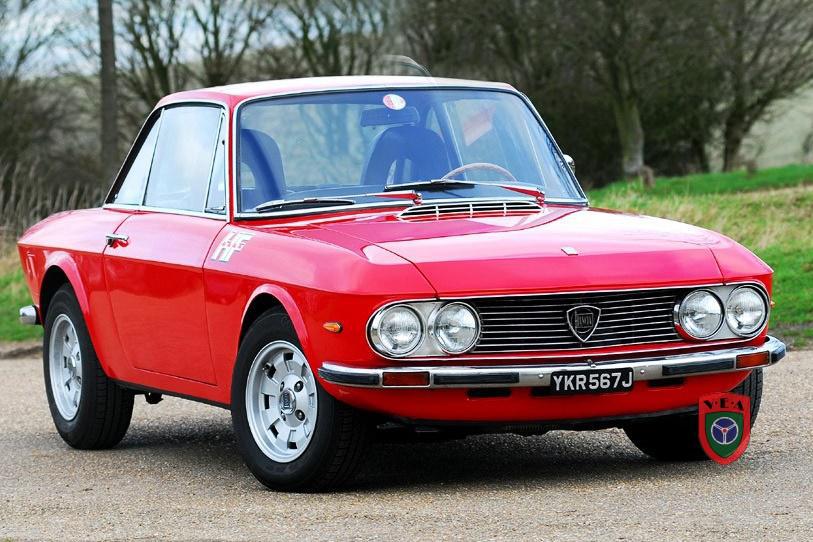
Ci-dessus : la HF 1.6 de 2e série, avec ses passages de roue évasés et ses roues en alliage.
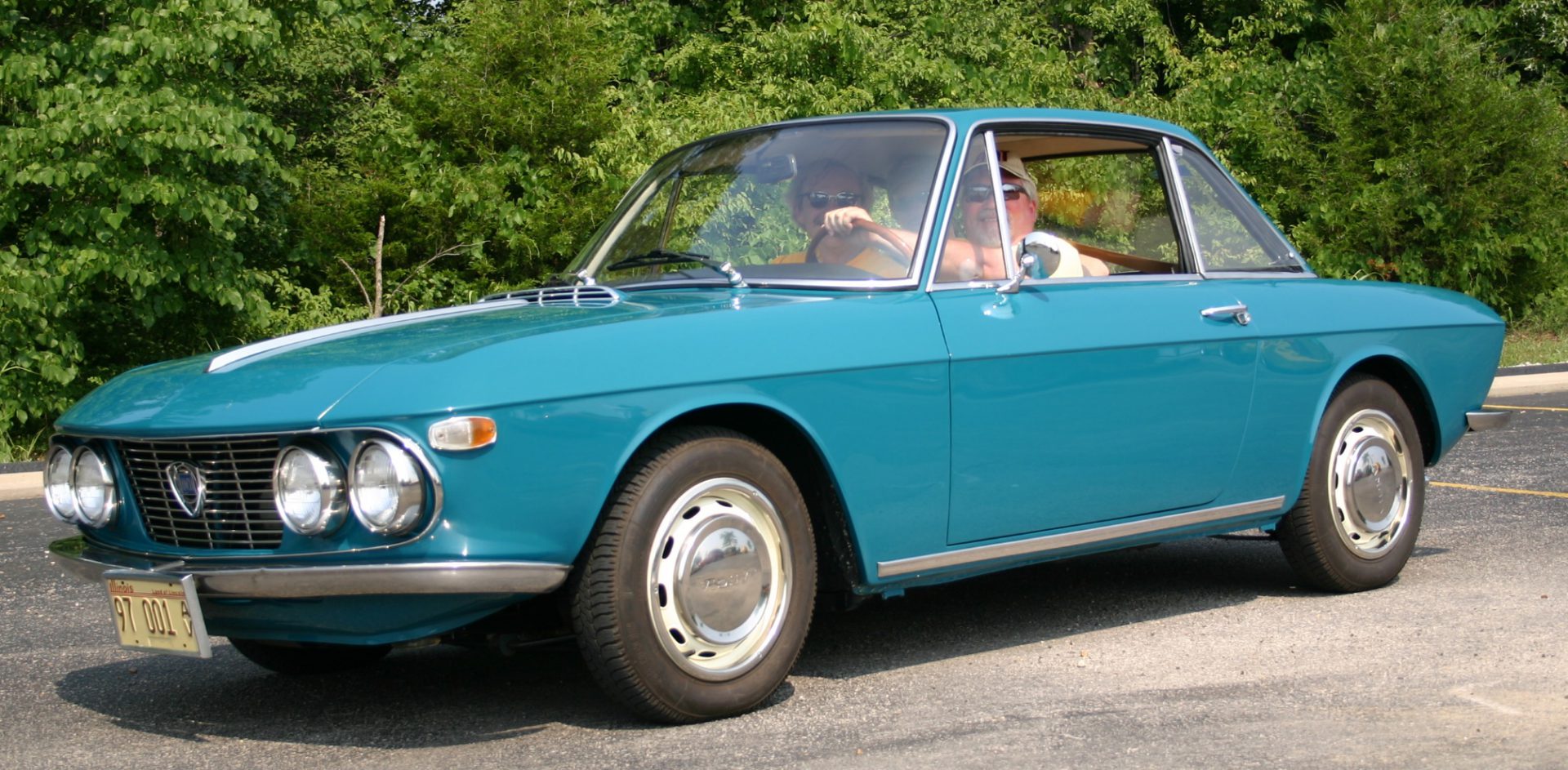
Ci-dessus : la Fulvia, comme elle est apparue en 1965 avec ses enjoliveurs de roue en acier et de gros phares.
Ci-dessus : le style lisse et net de la Fulvia a un charme éternel.
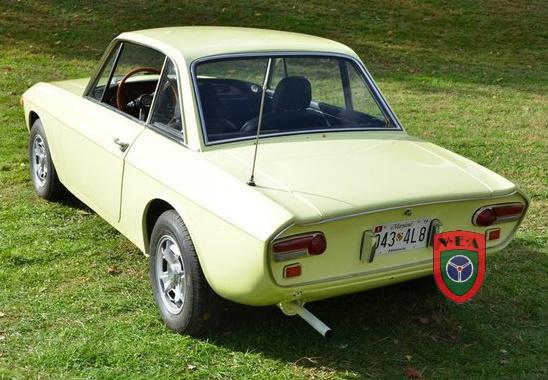
Ci-dessus : l’arrière si caractéristique de la Fulvia. En dessous, on voit ici l’essieu arrière, simple mais efficace.